

 Acrylic Sealants
 Construction Adhesives
 Double-Sided Tape
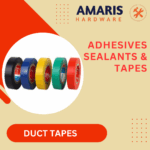 Duct Tape
 Electrical Tape
 Epoxy & Resins
 Silicone Sealants
 Masking Tape
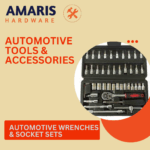 Automotive Wrenches & Socket Sets
 Battery Chargers & Jump Starters
 Car Jacks & Stands
 Car Wash & Detailing Products
 Diagnostic Tools
 Tire Inflators
 Vehicle Lighting
 Oil & Lubricants
 Adhesives & Sealants
 Bricks & Blocks
 Cement & Concrete
 Drywall & Plaster
 Flooring (Tiles, Wood, Laminate)
 Lumber & Plywood
 Paints, Primers & Coatings
 Insulation Materials
 Roofing Materials
 Circuit Breakers
 Electrical Cables & Wires
 Switches & Sockets
 Fuses & Relays
 Connectors & Terminals
 Electrical Boxes & Panels
 Conduit & Fittings
 Lighting Fixtures & Bulbs
 Extension Cords & Power Strips
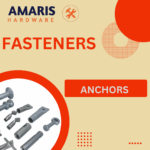 Anchors
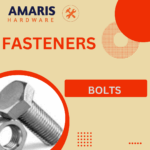 Bolts
Bolts Clips & Clamps
 Screws
 Nuts
Nuts Washers
 Rivets
 Nails
Nails Threaded Rods
 Hammers
 Measuring Tools (Tapes, Levels, Calipers)
 Screwdrivers
 Pliers & Cutters
 Saws & Blades
 Chisels & Punches
 Allen Keys & Hex Keys
 Ratchets & Socket Sets
 Wrenches & Spanners
 Power Tool Accessories (Blades, Bits, Discs)
 Rotary Tools
 Saws (Circular, Jigsaw, Reciprocating)
 Drills & Drivers
 Grinders & Sanders
 Heat Guns
 Nail Guns
 Impact Wrenches
 Batteries & Chargers
 Pipes & Fittings (PVC, Copper, PEX)
 Plumbing Tools
 Pumps & Motors
 Sealants & Adhesives for Plumbing
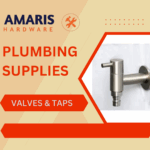 Valves & Taps
 Water Heaters
 Drainage Systems
 Faucets & Fixtures
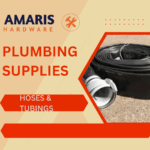 Hoses & Tubing
 Hinges & Latches
 Hooks & Brackets
 Window Hardware
 Chains & Cables
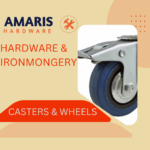 Casters & Wheels
 Shelving & Storage Systems
 Door Handles & Locks
 Drawer Slides & Cabinet Hardware
 Personal Protective Equipment (PPE)
 Respirators & Masks
 Safety Glasses
 Safes
Safes Security Cameras
 Gloves
 Helmets
 Ear Protection
 Fire Safety Equipment
 Locks & Padlocks
 Motion Sensors & Alarms
 Garden Fencing
 Garden Furniture Hardware
 Lawn Mowers
 Trimmers & Edgers
 Shovels & Spades
 Rakes & Hoes
 Pruning Shears & Loppers
 Watering Systems (Hoses, Sprinklers, Nozzles)
 Interior Paints
 Paint Brushes & Rollers
 Paint Strippers & Thinners
 Paint Trays & Accessories
 Exterior Paints
 Spray Paints
 Primers & Undercoats
 Varnishes & Stains
 Gaskets & Seals
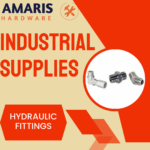 Hydraulic Fittings
 Industrial Fasteners
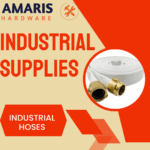 Industrial Hoses
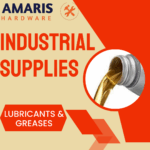 Lubricants & Greases
 Metal Sheets & Bars
 Bearings & Bushings
 Belts & Pulleys
 HVAC Filters
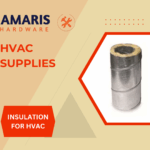 Insulation for HVAC
 Air Conditioners
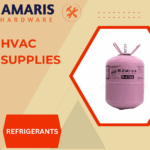 Refrigerants
 Ventilation Ducts & Fittings
 Thermostats & Controllers
 Fans & Blowers
 Pegboards & Hooks
 Shelving Units
 Storage Bins & Containers
 Toolboxes & Tool Chests
 Workbenches
 Drawer Organizers
 Labeling Supplies
 Welding Accessories (Clamps, Brushes)
 Welding Electrodes & Rods
 Welding Helmets & Gloves
 Welding Machines
 Soldering Irons & Stations
 Flux & Solder Wire
 Generator Accessories
 Inverters
 Portable Generators
 Power Inverters
 Transfer Switches
 Diesel & Gasoline Generators
 Transport Equipment: Carts, Dollies, and Hand Trucks
 Storage Solutions: Pallets, Racks, and Containers
 Lifting Equipment: Hoists, Cranes, and Jacks
 Conveyors & Accessories: Belts & Rollers
 Office Chairs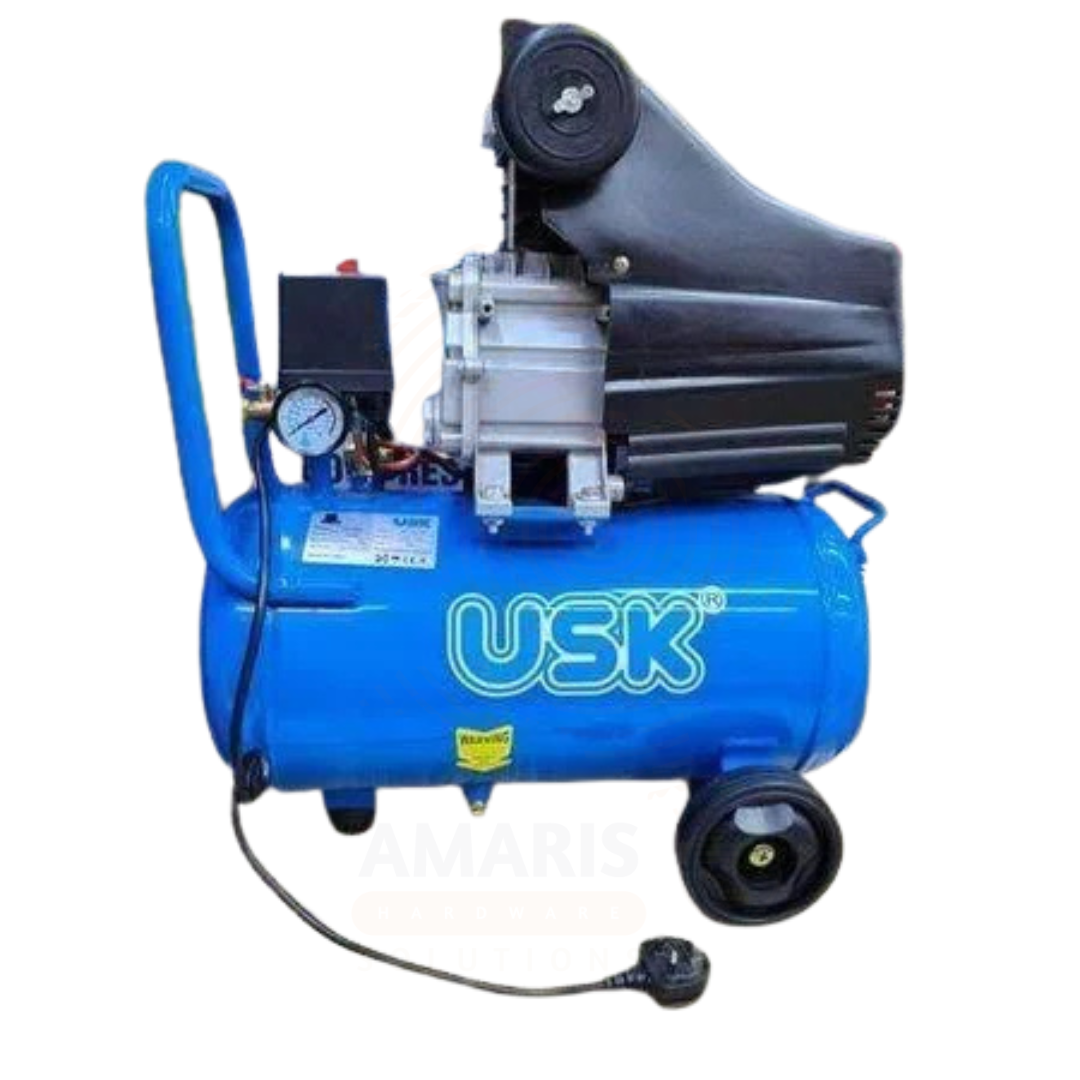

USK Belt Aircompressor
The Belt Aircompressor from USK (BA 7500-300) is a heavy-duty, belt-driven air compressor system with a 300-litre tank capacity and a powerful 7500W (approx. 10 HP) motor, designed for continuous industrial and workshop applications. The belt-drive mechanism reduces vibration and heat transfer, ensuring quieter, more stable operation and extended motor and pump life. It delivers a maximum pressure of up to 10 bar (145 psi) with a high displacement output, making it capable of powering multiple high-consumption pneumatic tools such as impact wrenches, paint sprayers, and sanders. Its robust construction and durable cast-iron pump make it ideal for demanding environments in healthcare facility maintenance, construction sites, and engineering workshops. The efficient belt-driven system ensures reliable performance and is easier to maintain compared to direct-drive units
USK Belt Aircompressor
PRIMARY USES
1. Heavy-Duty Compressed Air Supply for Continuous Industrial and Workshop Applications
Primary Use: Provides a powerful and reliable supply of compressed air (maximum pressure up to 10-13 bar / 145-188 psi) through a belt-driven system, designed for continuous operation in workshops, industrial settings, and large-scale maintenance tasks. The belt drive system reduces motor vibration and heat transfer, ensuring quieter and more stable performance compared to direct-drive units, making it ideal for the demanding environments of hospital engineering departments and construction sites.
How it helps: For the hospital maintenance team and clinical engineer, the belt-driven system offers significant advantages for heavy-duty, continuous-use applications. The belt drive transfers power more efficiently to the pump, prolonging the motor’s lifespan and reducing maintenance frequency. With its large tank capacity (typically 200-500 litres for industrial units) and high output (up to 15-20 CFM), the compressor can power multiple pneumatic tools simultaneously, such as impact wrenches, spray guns, and sanders, without significant pressure drop. The robust construction and industrial-grade motor (often 5.5-7.5 HP) ensure reliable performance even under prolonged, heavy loads, supporting critical workshop operations in healthcare facilities.
2. Supporting High-Volume Workshop Operations and Construction Projects
Primary Use: Capable of running high-consumption pneumatic tools essential for heavy equipment repair, spray painting, sandblasting, and construction tasks, making it indispensable for comprehensive facility maintenance and large-scale renovation projects.
How it helps: For the facilities manager and project coordinator, the belt compressor’s high air delivery rate and duty cycle enable efficient operation of tools like sandblasters, paint sprayers, and impact wrenches, which are critical for refurbishing medical equipment, maintaining infrastructure, and completing renovation projects on schedule. The belt drive system also ensures lower maintenance costs and easier servicing, as the belt is replaceable without needing to replace the motor or pump, contributing to long-term cost-effectiveness for the healthcare facility.
SECONDARY USES
1. Powering Pneumatic Tools in Construction and Renovation: Ideal for running heavy-duty pneumatic tools such as jackhammers, impact wrenches, sanders, and paint sprayers during large-scale construction, renovation, and maintenance projects.
2. Stationary Workshop Air Supply: Can be installed as a permanent, centralised air supply for a workshop, with hard-piped distribution lines to multiple workstations, eliminating the need for multiple portable compressors.
3. Automotive and Fleet Maintenance: Essential for garages and vehicle maintenance facilities to power tyre inflators, impact wrenches, and spray painting equipment for fleet vehicles and emergency response vehicles.
4. Sandblasting and Surface Preparation: The high air delivery and large tank capacity make it suitable for sandblasting tasks to prepare surfaces for repainting or refurbishment of metal structures and equipment.
1. BASIC IDENTIFICATION ATTRIBUTES
-
Device Type: Stationary/industrial belt-driven air compressor; not a medical device
-
Designation: USK Belt Aircompressor BA 7500-300
-
Motor Power: 7500W (approx. 10 HP)
-
Tank Capacity: 300 litres (approx. 79 gallons)
-
Maximum Pressure: 10-13 bar (145-188 psi)
-
Air Displacement/Free Air Delivery: Varies by model; typically 15-25 CFM (approx. 425-700 L/min)
-
Power Supply: 380-415V, 3-phase (industrial three-phase power, typical for large industrial compressors)
-
Drive System: Belt-driven
-
Pump Type: Cast-iron, oil-lubricated, two-cylinder or multi-cylinder design
-
Country of Origin: Typically China (depending on manufacturer)
-
Manufacturer: USK
2. TECHNICAL & PERFORMANCE PROPERTIES
-
Primary Action: Compresses atmospheric air using a reciprocating piston pump driven by an electric motor via a belt system
-
Drive System: Belt-driven, reducing motor vibration and heat transfer to the pump for quieter operation and longer motor life
-
Lubrication: Oil-lubricated pump for high output, continuous use, and durability
-
Cooling: Air-cooled system with integrated cooling fins; some models may feature additional fans
-
Safety Features: Automatic pressure switch (starts/stops motor at preset pressures), safety relief valve, tank drain valve
-
Control System: Full-pressure control with unloader valve for smooth motor start-up
-
Industrial Grade: Designed for heavy-duty, continuous operation
-
Mounting: Typically mounted on a sturdy base frame; may require anchoring for stability
3. PHYSICAL & OPERATIONAL PROPERTIES
-
Preparation: Check the oil level in the pump. Ensure the air filter is clean. Connect the power supply to a suitable three-phase outlet. Open the tank drain valve to release any condensation.
-
Usage Instructions: Turn on the compressor and allow the tank to fill to the cut-out pressure. Attach the required pneumatic tool or inflator. Use the pressure regulator to adjust the output pressure for the specific task. Drain moisture from the tank regularly (daily or after each use).
-
Storage Conditions: Store in a clean, dry, well-ventilated area. Protect the motor and electrical components from dust and moisture. Drain the air tank completely if storing for extended periods.
-
Ventilation: Ensure adequate ventilation around the compressor for motor cooling and heat dissipation.
-
Precautions: Always wear safety goggles and hearing protection when operating pneumatic tools. Never exceed the maximum working pressure of tools or hoses. Ensure the compressor is properly earthed.
4. SAFETY & COMPLIANCE ATTRIBUTES
-
Safety Classification: High-pressure industrial equipment; risk of bursting, flying debris, noise, and electric shock.
-
Pressurised Vessel: The air receiver is a pressurised vessel. Do not modify or weld. Drain moisture daily to prevent rust and potential failure.
-
Eye and Hearing Protection: Mandatory when operating the compressor and pneumatic tools.
-
Electrical Safety: Requires professional installation by a qualified electrician. Ensure proper three-phase power supply and earthing. Use appropriate circuit breakers and isolators. Do not use in wet conditions.
-
Fire Hazard: Keep away from flammable liquids and gases. The motor may overheat if ventilation is blocked.
-
Regular Maintenance: Change the compressor oil per the manufacturer's schedule. Clean or replace the air filter regularly. Inspect and replace the drive belt as needed. Check all fasteners for tightness.
-
Regulatory: Complies with applicable safety standards for industrial equipment.
1. SAFETY PRECAUTIONS
-
Pressurised Vessel: Never exceed the maximum working pressure of the air receiver (tank). Do not weld, drill, or modify the tank. Drain the moisture from the tank daily to prevent internal corrosion, which can lead to tank rupture.
-
Eye and Face Protection: Always wear safety goggles and a face shield when using pneumatic tools or blowing air. Flying debris can cause serious eye injury.
-
Hearing Protection: Compressors and pneumatic tools generate high noise levels. Use appropriate hearing protection.
-
Air Hose Safety: Use hoses and fittings rated for the working pressure. Never exceed the rated pressure of hoses. Avoid using hoses near sharp edges or heat sources.
-
Electrical Safety: This is an industrial three-phase unit. Installation must be performed by a qualified electrician. Ensure the compressor is properly earthed. Isolate the power supply before performing any maintenance.
-
Maintenance: Unplug the compressor (isolate the power) before performing any maintenance or cleaning. Check the oil level regularly. Keep the air filter clean. Inspect the drive belt for wear and tension.
-
Keep out of reach of children: Store in a secure location, away from unauthorised access.
2. FIRST AID MEASURES
-
Eye Injury (debris): Do not rub. Rinse immediately with plenty of clean, lukewarm water for at least 15 minutes. Seek medical attention.
-
Hearing Damage: If hearing loss or tinnitus is suspected, seek medical advice.
-
Burst Injury: In case of a burst hose or air line, treat the injury as a trauma. Apply direct pressure to stop bleeding. Seek immediate medical attention.
-
Electric Shock: Turn off the power supply immediately. If the person is not breathing, begin CPR and call emergency services. Do not touch the person until the power supply has been disconnected.
3. FIRE FIGHTING MEASURES
-
Flammability: The compressor is not flammable, but the motor and electrical components can be a source of ignition. The compressor oil is combustible.
-
Extinguishing Media: Use dry chemical powder, carbon dioxide (CO₂), or foam for fires involving the compressor. Use water spray for cooling surrounding materials.
-
Fire Response: In the event of a fire, evacuate the area and call emergency services. Isolate the power supply if safe.
Related products
Big Battery Pro
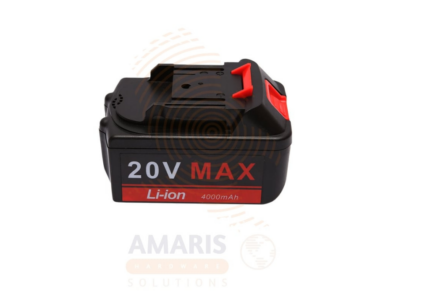
A " Big Battery Pro" typically refers to a rechargeable lithium-ion battery with a nominal voltage of 20 volts. The nominal voltage represents the average voltage output over the majority of the battery's discharge cycle. It's important to note that the actual voltage during use may fluctuate within a specified range.
These batteries are commonly used to power various devices, including power tools, garden equipment, and other portable electronic devices. The "20V" designation is a standardized measure indicating the electrical potential of the battery, providing a general indication of its power output.
Keep in mind that when considering a 20V battery, it's essential to verify compatibility with the specific device or tool it is intended for. Additionally, different manufacturers may have variations in the actual voltage, capacity, and features of their 20V battery products. Checking the product documentation or contacting the manufacturer for detailed specifications is recommended for accurate information.
Cement And Paint Mixer
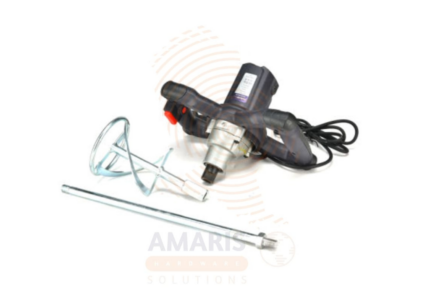
A cement and paint mixer is a mechanical device designed to efficiently and homogeneously blend cement or paint constituents to achieve a uniform and consistent mixture. Typically utilized in construction and painting applications, these mixers come in various designs, including portable or stationary models. They feature rotating blades, paddles, or agitators that facilitate the thorough mixing of dry or liquid materials, ensuring the creation of a well-mixed and homogeneous product suitable for construction or painting purposes.
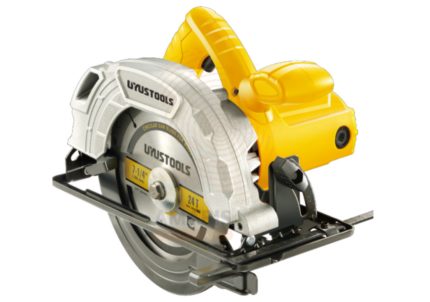
Circular Saw
A circular saw is a power tool equipped with a rotating circular blade, typically with teeth along its edge, designed for cutting various materials such as wood, plastic, metal, or masonry. It is commonly used in carpentry, construction, and other applications to make straight or beveled cuts with precision and efficiency. The circular saw is versatile and can be handheld or mounted on a table or other stationary surface, depending on the specific model and intended use.
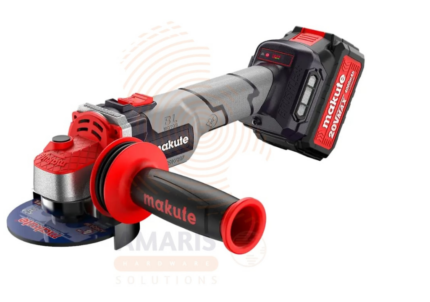
Cordless Angle Grinder
A cordless angle grinder is a handheld power tool designed for cutting, grinding, and polishing materials, typically metal or masonry. Unlike traditional angle grinders that are powered by electrical cords, cordless angle grinders are equipped with rechargeable batteries, providing greater mobility and flexibility in various work environments. These tools often feature a rotating disc or wheel that can be fitted with different abrasive attachments, allowing users to perform a variety of tasks such as cutting metal, smoothing welds, or removing rust and paint. Cordless angle grinders are widely used in construction, metalworking, and fabrication applications.
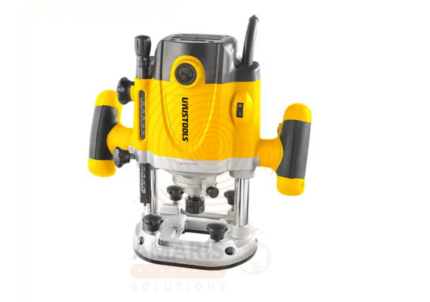
Electric Router
An electric router is a power tool used in woodworking and carpentry for hollowing out an area or creating a specific profile on the edge of a material, typically wood. It operates by spinning a cutting tool or bit at high speeds, allowing for precise and controlled removal of material. Electric routers are versatile tools and can be equipped with various bits to perform tasks such as shaping, grooving, trimming, and forming decorative edges. They are widely employed in both professional and DIY settings for tasks that require accurate and intricate detailing in woodworking projects.

Fibre Strengthened Resin Cutting Wheel
A Fibre Strengthened Resin Cutting Wheel refers to a cutting tool designed for various machining applications, particularly in the context of metalworking or construction. This type of cutting wheel is composed of a resin matrix, which serves as a binding material, reinforced with fibers for added strength and durability. The fibers are typically made of materials such as fiberglass or other composite materials.
The combination of resin and fibers enhances the cutting wheel's structural integrity, making it more resistant to breakage and providing improved performance during cutting operations. The reinforced design allows the wheel to withstand higher levels of mechanical stress and heat generated during cutting processes. Fiber-strengthened resin cutting wheels are commonly used in applications like cutting metal, steel, or other hard materials, where precision and durability are crucial.

Flat Knotted Wire Wheel
A Flat Knotted Wire Wheel refers to a rotating tool used in various applications, typically in metalworking and surface preparation. It consists of a wheel-shaped assembly with wire bristles that are tightly twisted or "knotted" together. The wire bristles can be made of steel or other durable materials, and they are arranged in a radial pattern around the wheel.
Knotted wire wheels are commonly attached to power tools such as angle grinders or bench grinders. They are employed for tasks like removing rust, paint, scale, or other surface contaminants from metal surfaces, as well as for deburring or blending welds. The tightly twisted configuration of the wire bristles enhances the wheel's durability and effectiveness in tackling tough materials and applications.
These wheels are available in various sizes and designs to suit different tasks, and they are known for their abrasive action, making them valuable tools in metal fabrication, construction, and maintenance work.
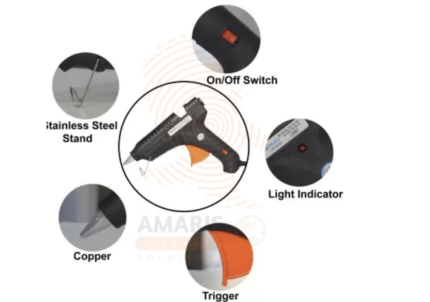
Glue Gun
A glue gun, specifically a 40-watt glue gun, is a handheld tool designed for dispensing hot melt adhesive in a controlled and precise manner. It typically consists of a heating element powered by a 40-watt electrical system, a trigger mechanism to control the adhesive flow, and a nozzle for directing the melted glue. The glue stick, usually made of thermoplastic materials, is inserted into the gun, melted by the heating element, and then extruded through the nozzle as a liquid adhesive. This versatile tool is commonly used in various DIY projects, crafts, and home repairs due to its quick and efficient bonding capabilities. The 40-watt power rating indicates the electrical power consumed by the glue gun to heat the adhesive to its melting point.