

 Acrylic Sealants
 Construction Adhesives
 Double-Sided Tape
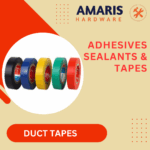 Duct Tape
 Electrical Tape
 Epoxy & Resins
 Silicone Sealants
 Masking Tape
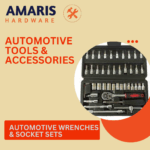 Automotive Wrenches & Socket Sets
 Battery Chargers & Jump Starters
 Car Jacks & Stands
 Car Wash & Detailing Products
 Diagnostic Tools
 Tire Inflators
 Vehicle Lighting
 Oil & Lubricants
 Adhesives & Sealants
 Bricks & Blocks
 Cement & Concrete
 Drywall & Plaster
 Flooring (Tiles, Wood, Laminate)
 Lumber & Plywood
 Paints, Primers & Coatings
 Insulation Materials
 Roofing Materials
 Circuit Breakers
 Electrical Cables & Wires
 Switches & Sockets
 Fuses & Relays
 Connectors & Terminals
 Electrical Boxes & Panels
 Conduit & Fittings
 Lighting Fixtures & Bulbs
 Extension Cords & Power Strips
 Anchors
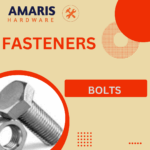 Bolts
Bolts Clips & Clamps
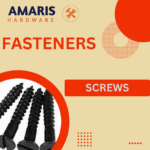 Screws
 Nuts
Nuts Washers
 Rivets
 Nails
Nails Threaded Rods
 Hammers
 Measuring Tools (Tapes, Levels, Calipers)
 Screwdrivers
 Pliers & Cutters
 Saws & Blades
 Chisels & Punches
 Allen Keys & Hex Keys
 Ratchets & Socket Sets
 Wrenches & Spanners
 Power Tool Accessories (Blades, Bits, Discs)
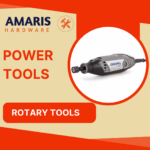 Rotary Tools
 Saws (Circular, Jigsaw, Reciprocating)
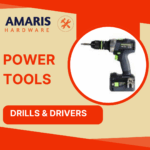 Drills & Drivers
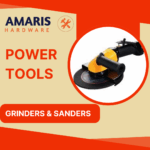 Grinders & Sanders
 Heat Guns
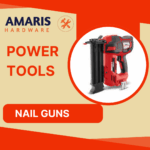 Nail Guns
 Impact Wrenches
 Batteries & Chargers
 Pipes & Fittings (PVC, Copper, PEX)
 Plumbing Tools
 Pumps & Motors
 Sealants & Adhesives for Plumbing
 Valves & Taps
 Water Heaters
 Drainage Systems
 Faucets & Fixtures
 Hoses & Tubing
 Hinges & Latches
 Hooks & Brackets
 Window Hardware
 Chains & Cables
 Casters & Wheels
 Shelving & Storage Systems
 Door Handles & Locks
 Drawer Slides & Cabinet Hardware
 Personal Protective Equipment (PPE)
 Respirators & Masks
 Safety Glasses
 Safes
Safes Security Cameras
 Gloves
 Helmets
 Ear Protection
 Fire Safety Equipment
 Locks & Padlocks
 Motion Sensors & Alarms
 Garden Fencing
 Garden Furniture Hardware
 Lawn Mowers
 Trimmers & Edgers
 Shovels & Spades
 Rakes & Hoes
 Pruning Shears & Loppers
 Watering Systems (Hoses, Sprinklers, Nozzles)
 Interior Paints
 Paint Brushes & Rollers
 Paint Strippers & Thinners
 Paint Trays & Accessories
 Exterior Paints
 Spray Paints
 Primers & Undercoats
 Varnishes & Stains
 Gaskets & Seals
 Hydraulic Fittings
 Industrial Fasteners
 Industrial Hoses
 Lubricants & Greases
 Metal Sheets & Bars
 Bearings & Bushings
 Belts & Pulleys
 HVAC Filters
 Insulation for HVAC
 Air Conditioners
 Refrigerants
 Ventilation Ducts & Fittings
 Thermostats & Controllers
 Fans & Blowers
 Pegboards & Hooks
 Shelving Units
 Storage Bins & Containers
 Toolboxes & Tool Chests
 Workbenches
 Drawer Organizers
 Labeling Supplies
 Welding Accessories (Clamps, Brushes)
 Welding Electrodes & Rods
 Welding Helmets & Gloves
 Welding Machines
 Soldering Irons & Stations
 Flux & Solder Wire
 Generator Accessories
 Inverters
 Portable Generators
 Power Inverters
 Transfer Switches
 Diesel & Gasoline Generators
 Transport Equipment: Carts, Dollies, and Hand Trucks
 Storage Solutions: Pallets, Racks, and Containers
 Lifting Equipment: Hoists, Cranes, and Jacks
 Conveyors & Accessories: Belts & Rollers
 Office Chairs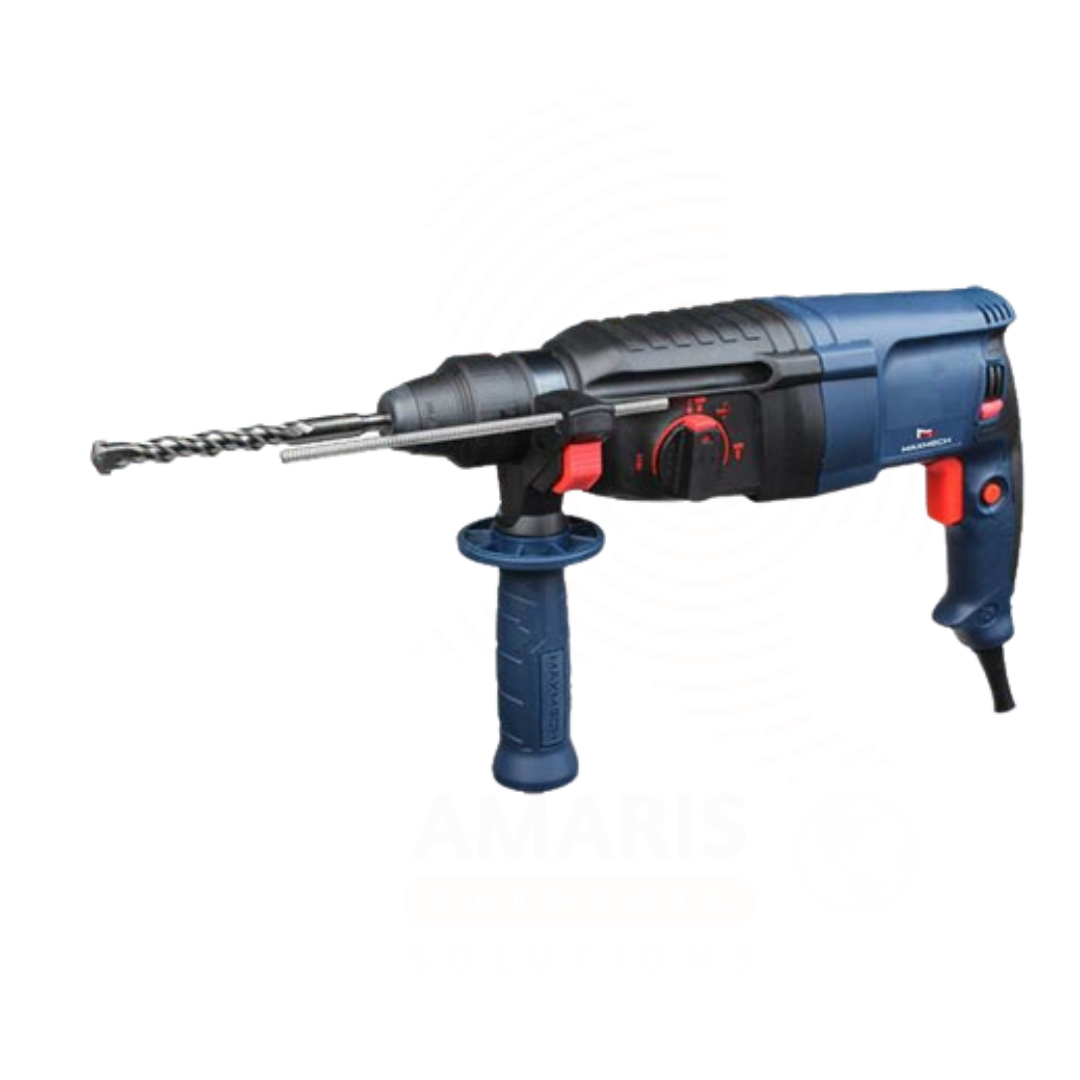

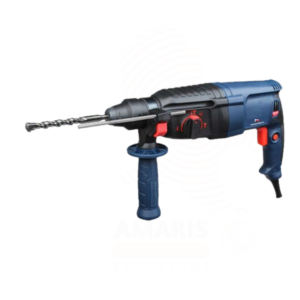
MaxMech Rotary Hammer
The Maxmech Rotary Hammer RH 800-26 is an 800W electric power tool with a 26mm maximum drilling capacity in concrete, featuring an SDS-plus quick-change chuck system for fast, secure bit changes. It offers three operating modes: rotary drilling (wood/metal), hammer drilling (concrete/masonry), and chiseling (light demolition) . With an impact energy of approximately 2.3-3.0 Joules and a variable speed of 0-1100 RPM, it delivers efficient drilling and chiseling in hard materials . Suitable for installing equipment, anchors, and fixtures, as well as renovation and maintenance tasks in healthcare facilities. Essential safety precautions include wearing hearing protection, safety goggles, and respiratory protection.
MaxMech Rotary Hammer
PRIMARY USES
1. Heavy-Duty Concrete and Masonry Drilling for Equipment Installation
Primary Use: A powerful electric rotary hammer (800W) with a 26mm drilling capacity in concrete, designed for heavy-duty drilling into concrete, masonry, brick, and stone to install anchors, fixtures, shelving, handrails, and medical equipment securely in healthcare facilities .
How it helps: For the biomedical engineer, maintenance technician, and facilities manager, the SDS-plus chuck system ensures quick, tool-free bit changes and efficient power transfer, making it far faster and more effective than standard hammer drills . The 26mm capacity allows drilling for M20 or M22 anchor bolts used in heavy equipment installation and structural anchoring. The 800W motor delivers sufficient impact energy (approximately 2.3-3.0 Joules) for efficient drilling in reinforced concrete . For the healthcare facility, this means reliable, secure installation of essential medical equipment and infrastructure without compromising structural integrity.
2. Chiseling and Light Demolition for Renovation and Maintenance
Primary Use: With the rotation stop function, the rotary hammer operates as a demolition hammer for chiseling tasks such as removing tiles, breaking up small concrete sections, chasing channels for conduit and piping, and removing old mortar during renovation projects .
How it helps: For the maintenance team, the chiseling function allows for efficient removal of damaged flooring, wall finishes, and fixtures during renovation without requiring a separate demolition tool. This is particularly valuable in healthcare settings where renovation work must be completed quickly to minimise disruption to patient care areas. The SDS-plus system accepts a wide range of chisel bits for different applications .
3. Installing Conduit, Piping, and Cable Trays in Healthcare Facilities
Primary Use: Used for drilling precise holes in concrete and masonry for running electrical conduit, plumbing pipes, data cables, and medical gas lines during new construction, expansion, or renovation projects .
How it helps: For the facilities manager and project coordinator, the rotary hammer’s 26mm capacity is ideal for drilling holes for standard conduit sizes used in healthcare electrical and plumbing installations. The depth stop ensures consistent drilling depths for accurate installation . The anti-vibration design and ergonomic grip (typically with a soft rubberised handle) reduce user fatigue during extended use .
SECONDARY USES
1. Drilling in Wood and Steel: When fitted with the appropriate SDS-plus to standard chuck adapter, the tool can be used for drilling into wood (up to 30mm) and steel (up to 13mm) for general maintenance and fabrication tasks .
2. Anchor and Fixture Installation: Used for installing expansion anchors, drop-in anchors, and chemical anchors in concrete for securing shelving, equipment, and structural fixtures .
3. Demolition of Non-Load-Bearing Structures: Suitable for light demolition of non-load-bearing walls, removal of old tiles, and breaking up small concrete sections during refurbishment projects .
4. Grooving and Channelling: Used for creating channels in masonry for running electrical cables and plumbing pipes during installation .
1. BASIC IDENTIFICATION ATTRIBUTES
-
Device Type: Rotary hammer drill (electric, corded)
-
Designation: Maxmech Rotary Hammer RH 800-26
-
Power Input: 800W
-
Max. Drilling Capacity (Concrete): 26mm (1 inch)
-
Max. Drilling Capacity (Wood): 30mm
-
Max. Drilling Capacity (Steel): 13mm
-
Chuck Type: SDS-plus
-
No-Load Speed: 0-1100 to 0-1200 RPM
-
Impact Rate: 0-4000 to 0-5300 BPM
-
Impact Energy: 2.3-3.0 Joules
-
Voltage: 220-240V, 50-60Hz
-
Operating Modes: 3 (rotary drilling, hammer drilling, chiseling)
-
Country of Origin: China (typical for Maxmech brand)
-
Manufacturer: Maxmech
2. TECHNICAL & PERFORMANCE PROPERTIES
-
Primary Action: Pneumatic impact mechanism delivers powerful hammering action combined with rotation for efficient drilling in hard materials
-
SDS-plus Chuck System: Allows tool-free bit changes; fluted design transfers maximum impact energy to the bit
-
Anti-Vibration Design: Reduces user fatigue during extended use
-
Depth Stop: Adjustable depth gauge ensures consistent drilling depths
-
Speed Control: Variable speed trigger for controlled starting and material-specific operation
-
Safety Features: Torque limiter prevents kickback if the bit jams ; double insulation for electrical safety ; lock-on button for continuous operation
-
Mode Selector: 3-position switch for rotary drilling, hammer drilling, and chiseling
-
Chisel Adjustment: Some models allow chisel position adjustment in 12 positions for optimal angle
3. PHYSICAL & OPERATIONAL PROPERTIES
-
Preparation: Ensure the correct SDS-plus bit is inserted and locked. Check the power cord for damage. Wear appropriate PPE. Set the mode selector to the required function.
-
Usage Instructions: Mark the drilling location. Start the tool at a low speed, gradually increasing to full speed. Apply steady pressure; let the tool do the work. For chiseling, set to hammer-only mode and apply moderate pressure. Use the depth stop for consistent hole depths. Allow the tool to cool during extended use.
-
Storage Conditions: Store in a dry, secure place. Keep bits and chisels in a dry environment to prevent rust.
-
Ventilation: Motor cooling relies on airflow; ensure vents are not blocked.
-
Precautions: Always use the side handle for two-handed operation. Do not apply excessive pressure. Use correct bits for the material. Work in a well-ventilated area to avoid dust inhalation. Secure the workpiece.
4. SAFETY & COMPLIANCE ATTRIBUTES
-
Safety Classification: High-power rotating and impacting power tool; risk of kickback, eye injury, hearing damage, and dust inhalation
-
Eye Protection: Mandatory (safety goggles or face shield)
-
Hearing Protection: Mandatory due to high noise levels (sound pressure level approx. 90 dB(A) )
-
Respiratory Protection: Mandatory when working with concrete/masonry to avoid silica dust
-
Kickback Hazard: Maintain a firm grip; use the side handle; torque limiter helps protect against kickback
-
Electrical Safety: Use a Residual Current Device (RCD); do not use in wet conditions; double insulated for safety
-
Dust Hazard: Silica dust from concrete and masonry can cause lung damage; use dust extraction or respiratory protection
-
Vibration Hazard: Prolonged use can cause hand-arm vibration syndrome; take regular breaks
-
Regulatory: Complies with applicable safety standards for Kenya
1. SAFETY PRECAUTIONS
-
Personal Protective Equipment (PPE): Always wear safety goggles or a face shield, hearing protection, heavy-duty gloves, and appropriate respiratory protection (dust mask or respirator) when operating the rotary hammer.
-
Kickback Hazard: Hold the tool firmly with both hands using the side handle. Do not stand directly behind the drill. Use the correct bit for the material. The torque limiter reduces the risk of kickback if the bit jams .
-
Electrical Safety: Use a Residual Current Device (RCD). Do not operate in wet conditions or near water. Inspect the power cord for damage before use.
-
Dust Hazard: Drilling concrete and masonry generates silica dust, which is harmful if inhaled. Use local exhaust ventilation, a dust extraction system, or wear a suitable respirator.
-
Vibration Hazard: Prolonged use can cause hand-arm vibration syndrome. Take regular breaks. Use the anti-vibration features where available.
-
Hearing Protection: Rotary hammers are noisy. Wear appropriate ear defenders.
-
Burn Hazard: The drill bit and chuck can become hot during extended use. Allow to cool before changing bits.
-
Maintenance: Unplug the tool before changing bits or performing maintenance. Regularly inspect the power cord and plug for damage. Clean air vents regularly.
-
Keep out of reach of children: Store in a secure location.
2. FIRST AID MEASURES
-
Eye Injury (debris): Do not rub. Rinse immediately with plenty of clean, lukewarm water for at least 15 minutes. Seek medical attention.
-
Cut Injury: Apply direct pressure to stop bleeding. Clean the wound. Cover with a sterile dressing. Seek medical attention if bleeding is profuse or the wound is deep.
-
Dust Inhalation: Move a person to fresh air. If symptoms persist, seek medical attention.
-
Hearing Damage: If hearing loss or tinnitus is suspected, seek medical advice.
-
Electric Shock: Turn off the power supply immediately. If the person is not breathing, begin CPR and call emergency services. Do not touch the person until the power supply has been disconnected.
3. FIRE FIGHTING MEASURES
-
Flammability: The rotary hammer is not flammable, but sparks generated during use can ignite flammable materials. The plastic casing may burn.
-
Extinguishing Media: Use water spray, foam, dry chemical powder, or carbon dioxide (CO₂) for fires involving the tool.
-
Fire Response: In the event of a fire, evacuate the area and call emergency services.
Related products

Cement Blender
A cement blender is a mechanical device designed for the purpose of mixing and blending various components of cementitious materials, such as cement, sand, and water, to create a homogenous mixture. This blended mixture is commonly used in construction and building projects, particularly for applications like concrete production. The blender typically features a rotating drum or container that facilitates the thorough mixing of the ingredients, ensuring a consistent and uniform composition for the construction materials.

Cement Blender – SDS Plus
A Cement Blender - SDS Plus mechanism typically refers to a power tool designed for mixing cement, mortar, or other construction materials. The term "SDS-PLUS" refers to a specific chuck and bit system commonly used in rotary hammers and drills. SDS-PLUS chucks allow for quick and secure attachment of drill bits and other accessories.
In the context of a cement blender with SDS-PLUS, it likely means that the tool has a specialized chuck system for easy attachment of mixing paddles or blades used in blending cement or similar materials. The SDS-PLUS system is known for its quick-change capability, enhancing efficiency and convenience when working with different attachments. The blender's design may include features to ensure effective mixing of construction materials, making it suitable for tasks like preparing mortar or concrete on construction sites.
Chuck Die Grinder
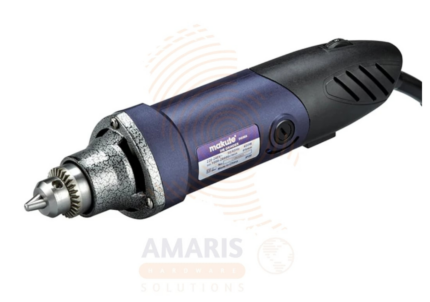
A Chuck Die Grinder is a handheld power tool equipped with a collet or chuck that holds a rotary burr or abrasive head. This tool is commonly used for precision grinding, polishing, and shaping of metal, wood, plastic, and other materials. Chuck Die Grinders are versatile and compact, allowing for intricate and detailed work in various applications, including metalworking, woodworking, and fabrication. They are widely employed in industries such as machining, automotive, and aerospace, as well as by hobbyists and craftsmen for tasks requiring fine control and high-speed material removal.

Circular Saw Blade for Aluminum
A circular saw blade for aluminum is a cutting tool specifically designed for use with a circular saw to cut through aluminum materials. It features specialized teeth and design elements to optimize the cutting process for aluminum, which has different characteristics compared to wood or other materials. These blades typically have a high tooth count, often with specially shaped teeth, and may incorporate coatings or materials that reduce heat buildup during cutting. The goal is to provide efficient and clean cuts through aluminum while minimizing the risk of overheating or material deformation.

Circular Saw Blade for Wood
A circular saw blade for wood is a cutting tool designed specifically for use with a circular saw. It typically consists of a flat, circular disc with sharp teeth along its outer edge. The blade is mounted onto the arbor of the circular saw, and as the saw operates, the blade spins rapidly to cut through wood materials. Circular saw blades for wood are specifically engineered to make efficient and clean cuts in wood, and they come in various sizes and tooth configurations to suit different cutting tasks and wood types. The teeth on the blade are strategically shaped and arranged to ensure smooth and precise cutting while minimizing splintering and tear-out on the wood surface.

Countersink Drill Set
A countersink drill set typically refers to a collection of six tools designed for countersinking operations in woodworking or metalworking. Each set usually includes six individual countersink drills with varying sizes or angles. Countersinking is a process that involves creating a conical hole in a material, allowing the head of a screw or bolt to sit flush with or below the surface. These drill sets are essential for achieving a professional finish in various applications where a smooth and even surface is desired, such as in carpentry, metal fabrication, or DIY projects.

Double – End Bits Set
A Double - End Bits Set typically refers to a collection of interchangeable tool bits designed for use with screwdrivers, power drills, or similar tools. Each bit in the set has two distinct ends with different types or sizes of tips, allowing the user to perform various tasks without needing multiple individual bits. These sets often include a variety of common bit types, such as Phillips, slotted, Torx, or hex, providing versatility for different screw and fastener types. The double-ended design allows users to flip the bit and switch between different tips easily, making it a convenient and space-saving solution for various applications.
Gasoline Hedge Trimmer
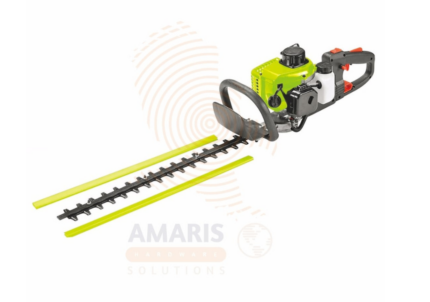
A gasoline hedge trimmer is a handheld gardening tool powered by a gasoline engine, designed for trimming and shaping hedges, bushes, and shrubs. It consists of a cutting blade or blades, typically reciprocating, attached to a long shaft with a handle or grip for ease of use. The gasoline engine provides the necessary power to drive the blades, offering mobility and independence from electrical outlets, making it suitable for use in outdoor settings where access to electricity may be limited. Gasoline hedge trimmers are valued for their versatility, allowing users to manicure and maintain landscaping with efficiency and precision.